
WHO SHOT YA? THE LIFE AND ART OF ERNIE PANICCIOLI
Words by Michael A. Gonzales | Images by Ernie Paniccioli
Since returning to Brooklyn after being discharged from the Vietnam War in the early seventies, 61-year-old photographer Ernie Paniccioli is rarely without his camera. A Cree Native American, who relocated to Jersey City years ago, he's always ready to document the ever-changing world of music, art and politics.
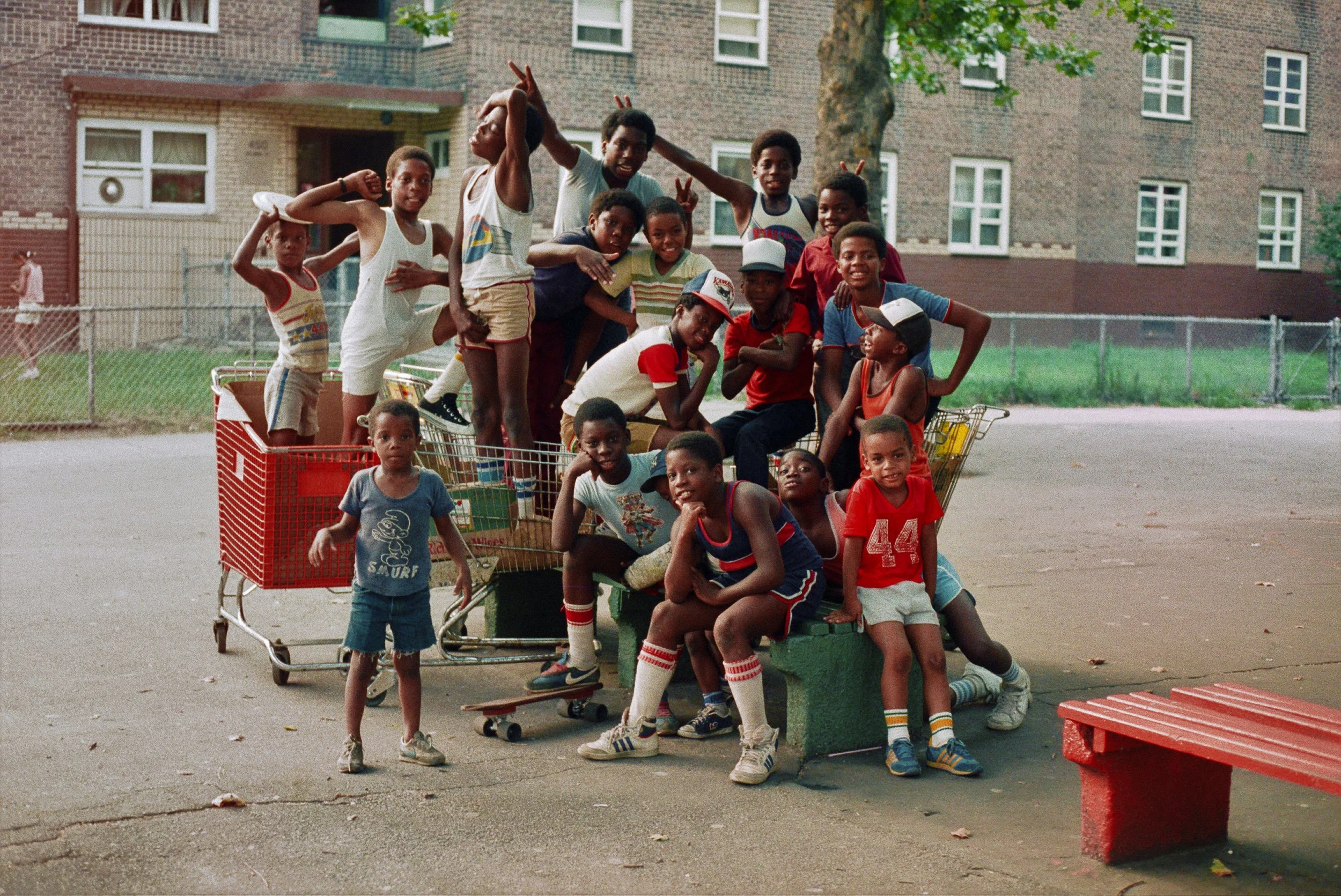
Although Paniccioli is also a fiery public speaker who modeled himself after Malcolm X, he is most famous for his intimate images of wild styled hip-hop kids, which span three decades. Beginning in 1974, as he roamed through various neighborhoods with his Canon as a way of reclaiming the landscapes he missed while at war, Ernie began shooting pictures of punk rockers on the Lower East Side and graffiti crews further uptown.
Like his comrades behind the camera, Joe Conzo and Jamel Shabazz, two of Paniccioli’s favorite picture-takers, he was one of the few photographers allowed into the inner sanctums of those subterranean urban artists welding spray cans.
"When I first started hanging around, a few of the kids thought I was a cop, so they would run away,” Ernie laughs. “After a while we got to know each other, and they trusted me enough to tell me where they would be bombing. Believe me, I took it as a great honor that these guys invited me into their world.”
In 1990, at Big Daddy Kane’s birthday bash in Times Square, I met Paniccioli as he snapped flicks of former ghetto boys Mike Tyson and Biz Markie. Both happily posed for his pictures. Shooting for the classic rap magazine Word Up, where he started in 1987, I admired the friendly rapport he had with his iconic subjects. Whereas others of his ilk could be indifferent or bossy, Ernie came across as a big brother that the often suspicious rappers knew they could trust.
“From MC Lyte to Chuck D., Biggie Smalls to Queen Latifah, they’ve all respected me, because I’ve always respected them,” he says. “Tupac used to spit at other photographers, but he always showed me love. They know my love for hip-hop and their craft, and they also know I’m not their competition. I’m just trying to get the best shot possible.”
Over the years, having shot “the good, the bad and the ugly,” Paniccioli’s pictures have been reprinted in The New York Times, Rolling Stone and various books, including my own relic Bring the Noise. In addition, his work has also been displayed at the Rock and Roll Hall of Fame in Ohio and the Brooklyn Museum of Art.
In 2002, Ernie’s released his first book Who Shot Ya?, written and edited by New Jersey native and author Kevin Powell. “I remember being at a party with Grandmaster Flash and someone referred to both of us as legends. Flash said to me, ‘You gotta be careful with that legend stuff, Ernie. It means you’re either dead or broke and you don’t want to be either one.’ That’s something I’ll never forget.”
However, for all of accolades he has received, Ernie is quick to say that his life doesn’t begin and end with the camera. “What makes one truly deep is the depth of our experiences,” he says. “I love hip-hop, but I had a life before it.”
From the time he was a kid, hanging-out in the Greenwich Village folk scene with his Chelsea Vocational High School classmate and friend Richie Havens, who introduced him to Bob Dylan, to his days as a homeless teenager, crashing on the couch of avant-garde pianist Cecil Taylor, to meeting the famous novelist, essayist and expatriate James Baldwin at a press conference in 1987, Paniccioli has always been in the cultural mix.
“I asked Baldwin for an autograph, which is something I rarely do,” he explains. “We talked for a long time and I’ll always remember him saying, ‘I like you. You’re a little off-key.’ We were going to get together for lunch and conversation, but he soon went back to France, where he died a few months later.”
Perhaps one of Ernie’s most cherished friendships was with controversial former Nation of Islam member Khalid Abdul Muhammad. Having died in 2001, Muhammad inspired the already political minded Paniccioli, who often speaks at youth events and activist seminars. “Khalid, as we all know, wasn’t one to bite his tongue. I miss his vibe, his spirit and his whole flow.”
While the spectrum of rap music spans from “stupid fresh” to more intellectual musings, Paniccioli misses the era when politically minded artists were on the forefront of the movement. “I could care less about Jay-Z and Kayne West rapping about Maybachs and money,” he says. “I remember when hip-hop was the voice of the voiceless, when MCs like Chuck D., KRS-One and Nas couldn’t hide the powerful love they had for their people and that love was reflected in everything they did.
“Now days,” he continues, “if rappers have an entourage and a few bodyguards, they think they’ve made it. Most of them don’t need bodyguards, because no one even knows who they are.”
In the spring of 2011, Ernie was diagnosed with cancer and recently began chemotherapy. The evening that we spoke, which was his third day of treatment, he sounded strong as the warrior he has always been.
While friends and artists across the globe have reached out to help support his inflating medical bills, for which he is most grateful, he says, “Hopefully, I won’t be remembered just for having cancer, but also for my contributions.”
With the lasting beauty of his massive archive of pictures, it’s safe to say that Ernie Paniccioli’s legacy as a man and an artist is already chiseled in the stone.
Michael A. Gonzales has written about art for Uptown, Vibe and the Dublin-based One More Robot. He lives in Brooklyn.
HYCIDE explores the roles we create for ourselves and those created for us, challenging the status quo while bearing witness to the feared, neglected and misunderstood.
Our Mission: Stories of survival and freedom. No judgment.
READ MORE FROM HYCIDE MAGAZINE