
BLACK BERLIN
words by Carrie Stetler and Shamsan Anders
images by Shamsan Anders
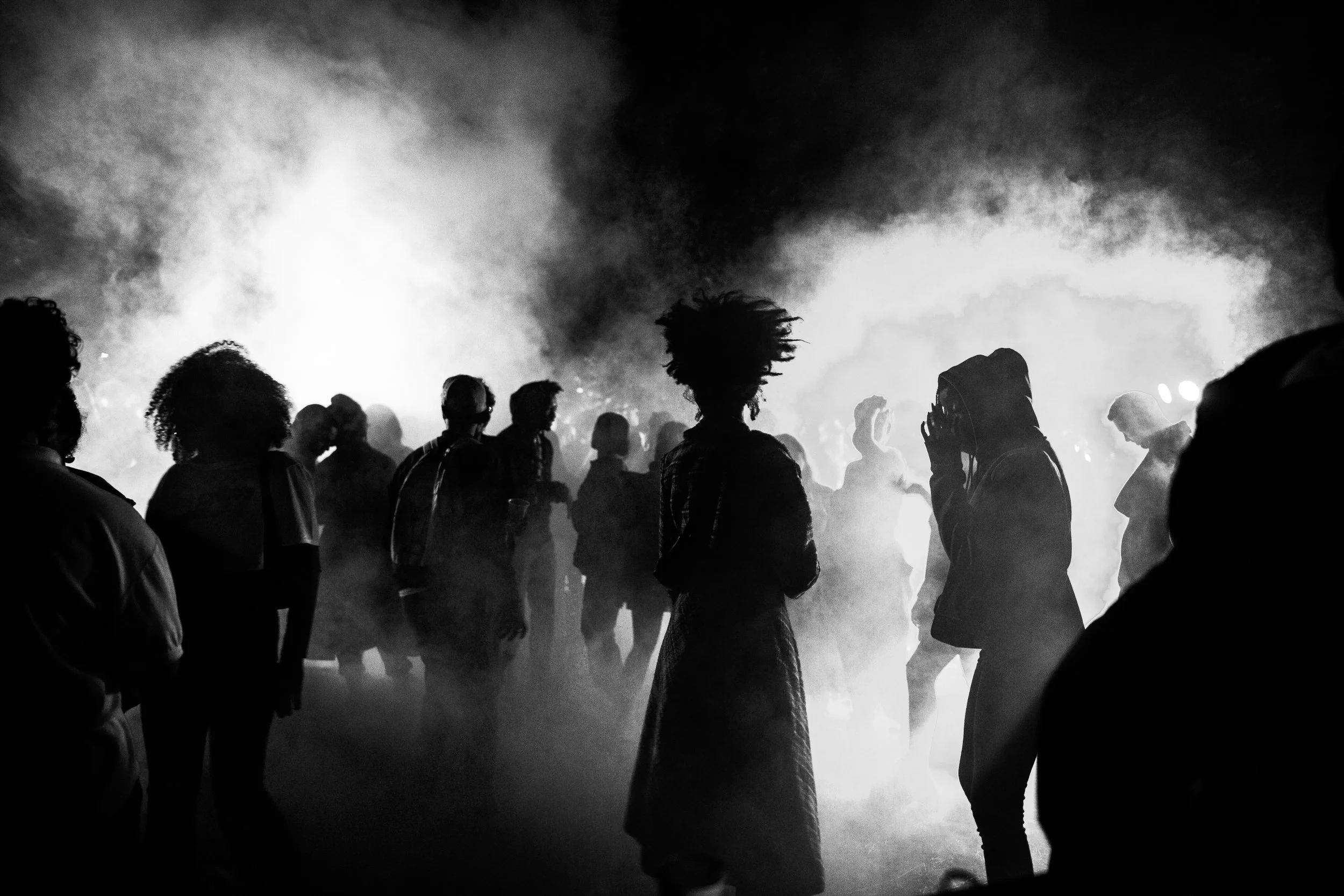
Shamsan Anders has been documenting the lives of Black Berliners as the population of Black people in Germany expands. Since 2010, their numbers have doubled to one million, with an increasing diversity of nationalities and cultures.
The history of Black Germans began when Africa was divided among European colonizers in the 19th century. Under the Nazi regime, Black people were considered an inferior race and were forbidden to have sexual relations with or marry “aryans.” Five hundred Afro-Germans were subjected to forced sterilization, a plan the Nazis hoped to extend to all Black Germans.
In Post-war Germany, many Black Germans were the children of foreign Black military personnel and white German mothers. These children often grew up with unknown fathers and mothers who raised them in a climate of racist stigmatization. Today, many Black Germans are West African immigrants who arrived as guest workers or students.
Berlin, a city renowned for its nightlife, has its own rich history of Black culture and political turmoil stemming from the Cold War era, after the city was divided in 1949 when communists came to power, occupying the eastern part of Germany while Allies claimed the west.
Although Black people in Germany are often marginalized and misrepresented in the media – something Anders hopes to help change through his images – he says the city still stands as a symbol of “freedom, chance, tolerance and diversity.’’
Carrie Stetler: How would you describe the history of Black Germans in Berlin?
Shamsan Anders: Black people in Germany are a fraction of the overall population of 80 million but more than eight percent of the total immigrant population. Due to the global situation of flight caused by climate, poverty and war, the number will continue to increase, but it has already grown so much. Some weeks ago I talked to a young Black father from Cameroon who moved from Paris to Berlin. He asked why some Black people on the street greet him even when they don’t know him. I tried to explain that this is behavior that came up 20, 30 plus years ago, when the number of Black people was so small, every Black person was so happy to meet another. I remember well when I was a kid, I was the only boy as far as you could see with colored skin. In my youth and early 20s, I knew almost every Black person my age living here. Really crazy when I compare the past with nowadays. As recently as February 2021, a UN report called on Germany to recognize Black people as a disadvantaged minority and to develop a national action plan to improve their living conditions. This is because Black people are largely underrepresented in the German media landscape and at the same time are still negatively stereotyped. Black people are statistically one of the groups of people most affected by racial profiling.
CS: How are these communities similar to, and how do they differ from, other Black communities in Europe and the U.S.?
SA: The Black communities in Germany are still much smaller than in the Netherlands, the U.K., or France, and differ mainly in their migration histories. In the U.K. and France, for example, a large portion of Black people come from former colonies of individual European countries. Black people from former German colonies, such as Namibia, Togo, etc., are a smaller group and less prevalent. Many here today are West African. Almost all Afro-German children born in Germany between the ‘50s and ‘70s had a white mother and a Black father, but in most cases the Black father was absent. Fatherless children born between the ‘60s and ‘80s here in Berlin and other parts of Germany frequently have a Black American father who was among the GIs stationed here. This distinguishes the German Black community from all others in Europe.
CS: Tell us about the project you’re working on that focuses on Black fathers in Germany?
SA: Black German children from the Post-war era often grew up with their biological mother but without a biological father. Mostly there was no contact with the father. The Black father was simply gone. But where were all these fathers, and what did their absence mean for their children? The Black father enables his child to accept his Blackness as a matter of course. There is an often hidden longing that leads many Black Germans to seek their unknown father. Knowing him liberates our Blackness, it allows for awareness. Not everything that we need for our healthy and free development is possible. But a relationship with the Black father should be an option as often as it can be. Very often in our recent past it was not. My project is called “Reality Check: Black Fathers in Germany.” It focuses on a new generation of Black daddies who are proud, committed and self-determined. For a year, I met different Black fathers from all over the country and accompanied them with my camera through their everyday lives – between work, family and leisure – to get a better impression of what these men experience in dealing with their daily struggles and personal successes. The result is a photographic series of portraits, snapshots and interviews of 30 to 40 Black fathers from diverse backgrounds.
CS: What is your own story as a Black Berliner and photographer?
SA: As a person of color, growing up without my Black-Arab father, together with my single German mom, I was raised in the heart of Berlin. During my early years I had a Cuban stepfather, which strongly influenced me with all the Latino vibes and lifestyle. In the ‘80s there were hardly any Black toys or representation in media. As a young boy, I experienced the racism of the neo-Nazis during the reunification era of East Berlin. It was so bad we had to move. That’s when I came to the hood – during the ‘80s and ‘90s, when there were a lot of immigrants from Turkey and Asia. It was a totally different world: drugs, crime, violence. I was an innocent boy and had no fucking clue but was happy to be one of a million looking different compared to a typical German. Maybe that’s why my empathy for Blacks and other marginalized and underprivileged groups is very strong today. Growing up among others in the Afro-German and Latino communities has inspired in-depth projects documenting Black society in Germany and especially Berlin. I’m also working on my first short film. I’m a supporter and friend of various Black artist collectives, which has led to an international network. I live this passion, and I am fascinated by the constant change and diversity of the mother city. As an established Berlin street photographer, I know this city of contrasts, its corners and edges, colors and facets, as if it was my vest pocket.
CS: What about the history and culture of Berlin makes it unique?
SA: What makes Berlin so unique, especially regarding its Black communities, is that the capital was divided by the Berlin Wall from 1961 until 1989 during the times of the Cold War. It is here that the immigration histories of East and West Germany begin to differ significantly. While in West Germany and West Berlin, the emergence of Black communities was strongly influenced by Afro-American, British, and French soldiers – and later by immigrants from Ghana, Nigeria and even Congo – the eastern part was developed by Black guest workers and students from former socialist partner countries, such as Cuba, Angola, Libya, Mozambique, etc. In the last 10 to 15 years, Berlin, which is the capital of Germany, has become a magnetic attraction for creativity and self-realization, especially for young people from all over the world. Berlin is currently the most popular and affordable world metropolis in Europe. But this has led to a gentrified city center with increasing tourism, skyrocketing housing prices and displacement of long-term-residents, who are often working class and migrant.
CS: What are you trying to convey in your photos? What do you want people to see?
SA: I’ve had a growing passion for street photography. But I began with portrait sessions, starting with my closest friends and friends of friends. Many are Black Berlin artists. Compared to their white colleagues, Black artists often find more difficult conditions and represent a strongly underrepresented part of the media landscape. Their creative work is often in response to increasing xenophobia and social inequality. These artists are, for me, the heroes of everyday life in Berlin and the big stars of my social media accounts. Supporting them with pictures and giving them the attention they should have is one of my motivations. In my photography, I also try to show an image or frame of the whole ethnic variety here – from all the different African countries. All came with different waves in different times and have certain stories to tell. Currently, many new ones come from Gambia to the Berlin streets. These guys have hard challenges to master here. But I would rather invite the viewer on their own journey. I prefer art that raises questions rather than serving up answers. Viewers have described my images as authentic, touching, sometimes melancholic. They are an expression of my inner world and reflection of society, a personal kind of visual poetry. My awareness of what I’m doing here photographically was also influenced by my time in the Bronx and Harlem in 2017 and some personal encounters with Black photographers like Trevon Blondet. Also the Photo League and artist talks, like one by Joseph Rodriguez, strongly inspired me to start systematically documenting Afro-German communities. I hope to inspire young Black photographers to find the historical value in photographic documentation. There is hardly any awareness of that here so far. I have a dream, a vision, that in 30 or 50 years there will be so many Black Germans that it will be impossible to ignore their existence in the media world, politics, public life, and on the job market in this republic. One day, there will even be a museum for Black German history.


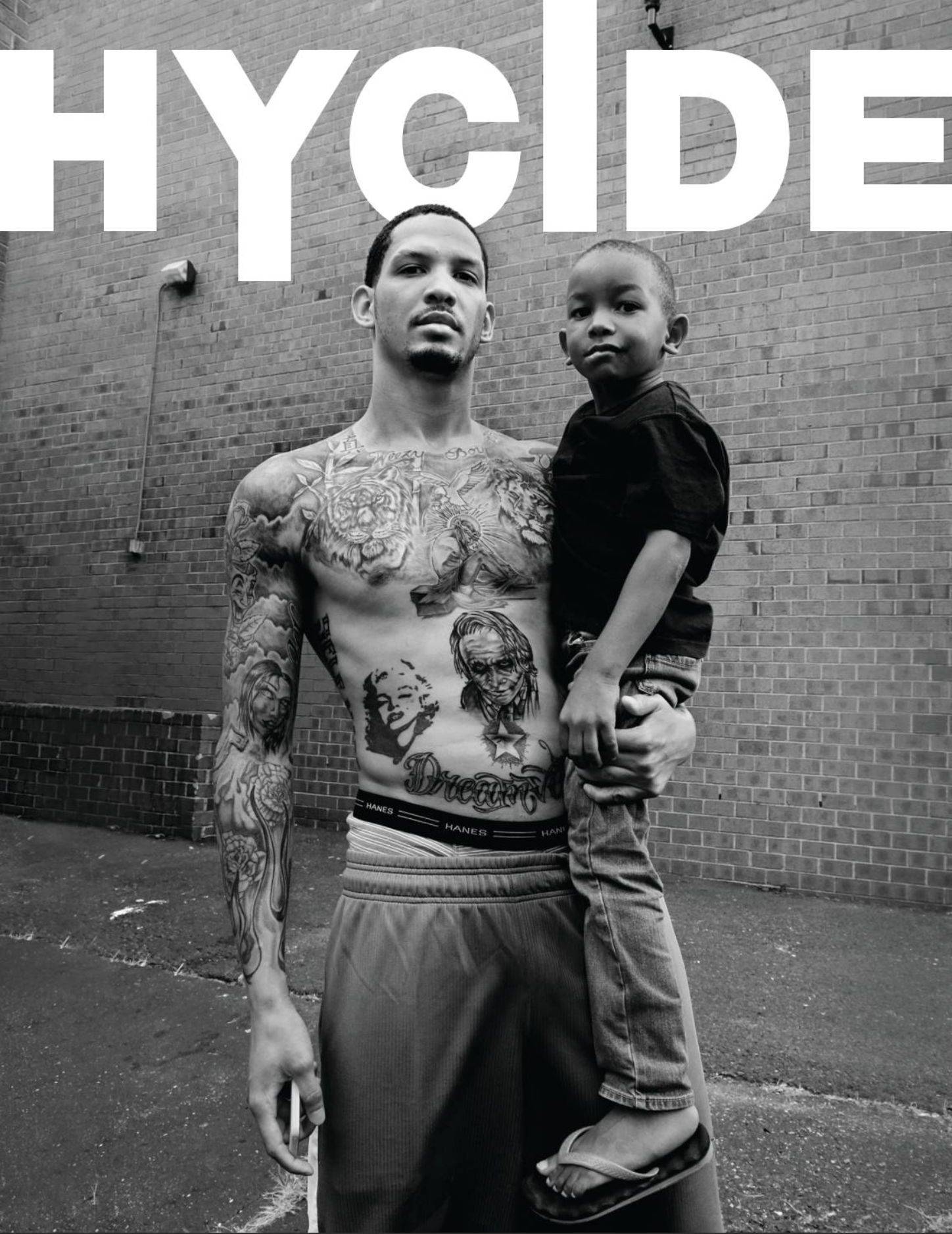


HYCIDE explores the roles we create for ourselves and those created for us, challenging the status quo while bearing witness to the feared, neglected and misunderstood.
Our Mission: Stories of survival and freedom. No judgment.
READ MORE FROM HYCIDE MAGAZINE
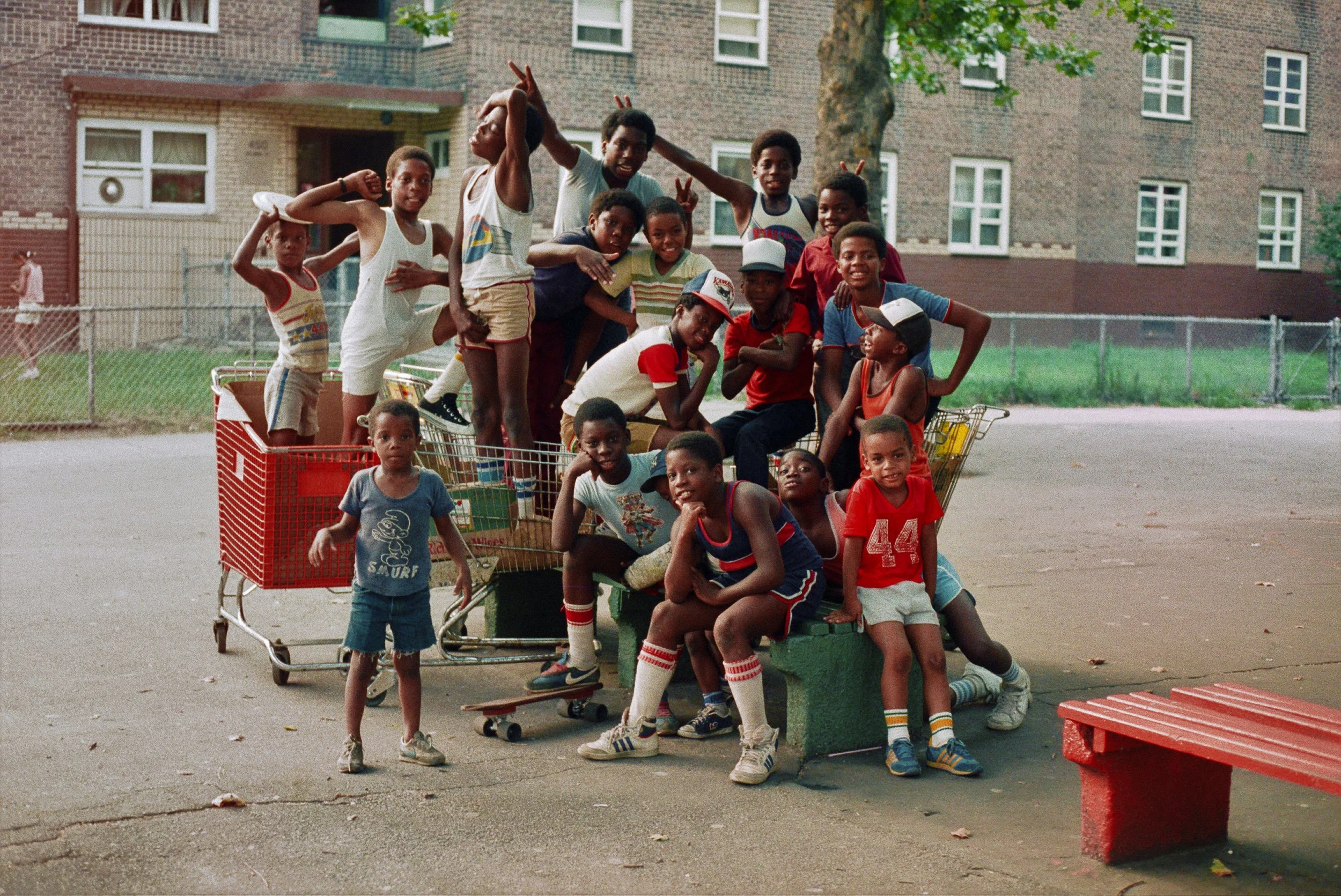
FORWARD EVER, BACKWARDS NEVER
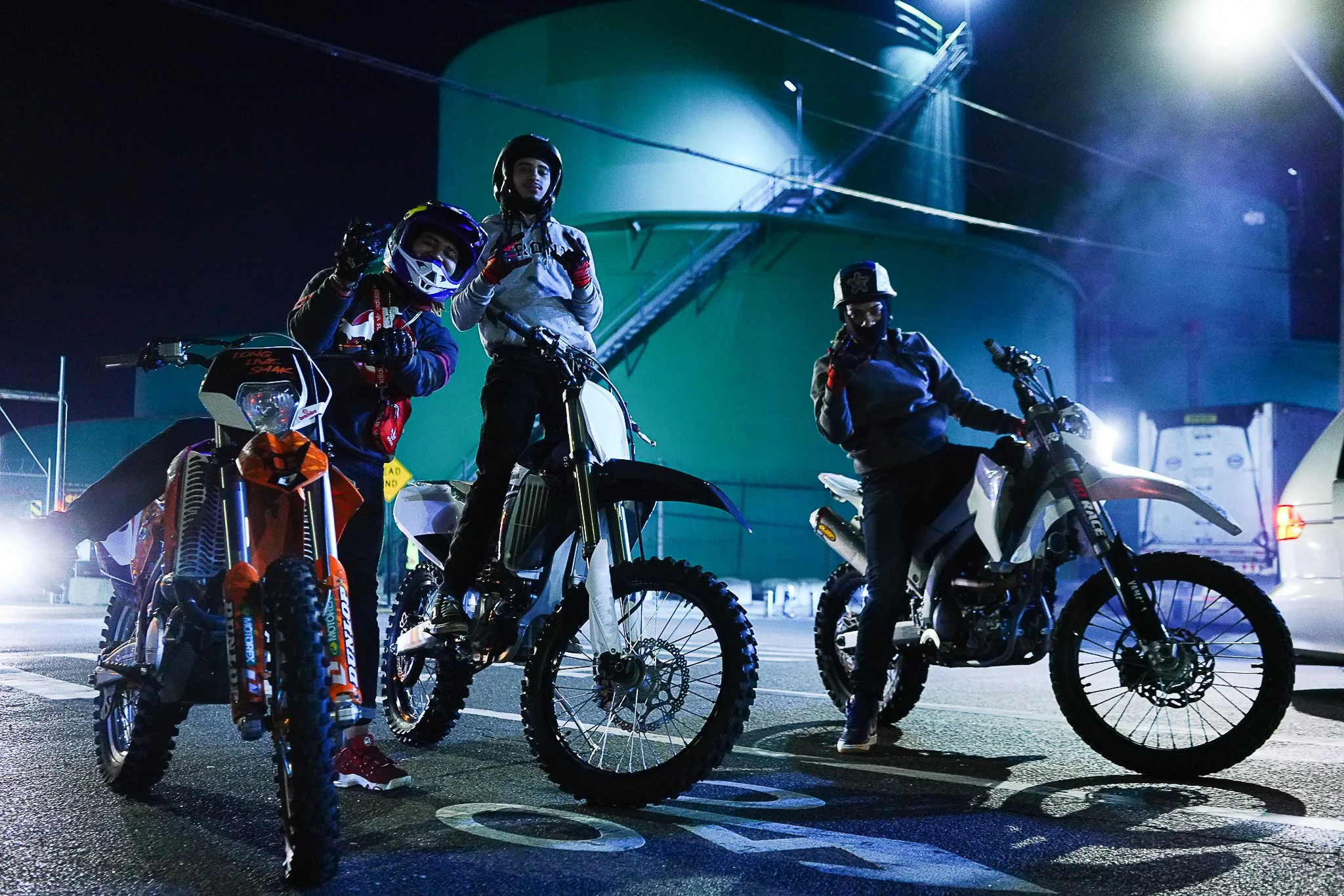
BIKE LIFE
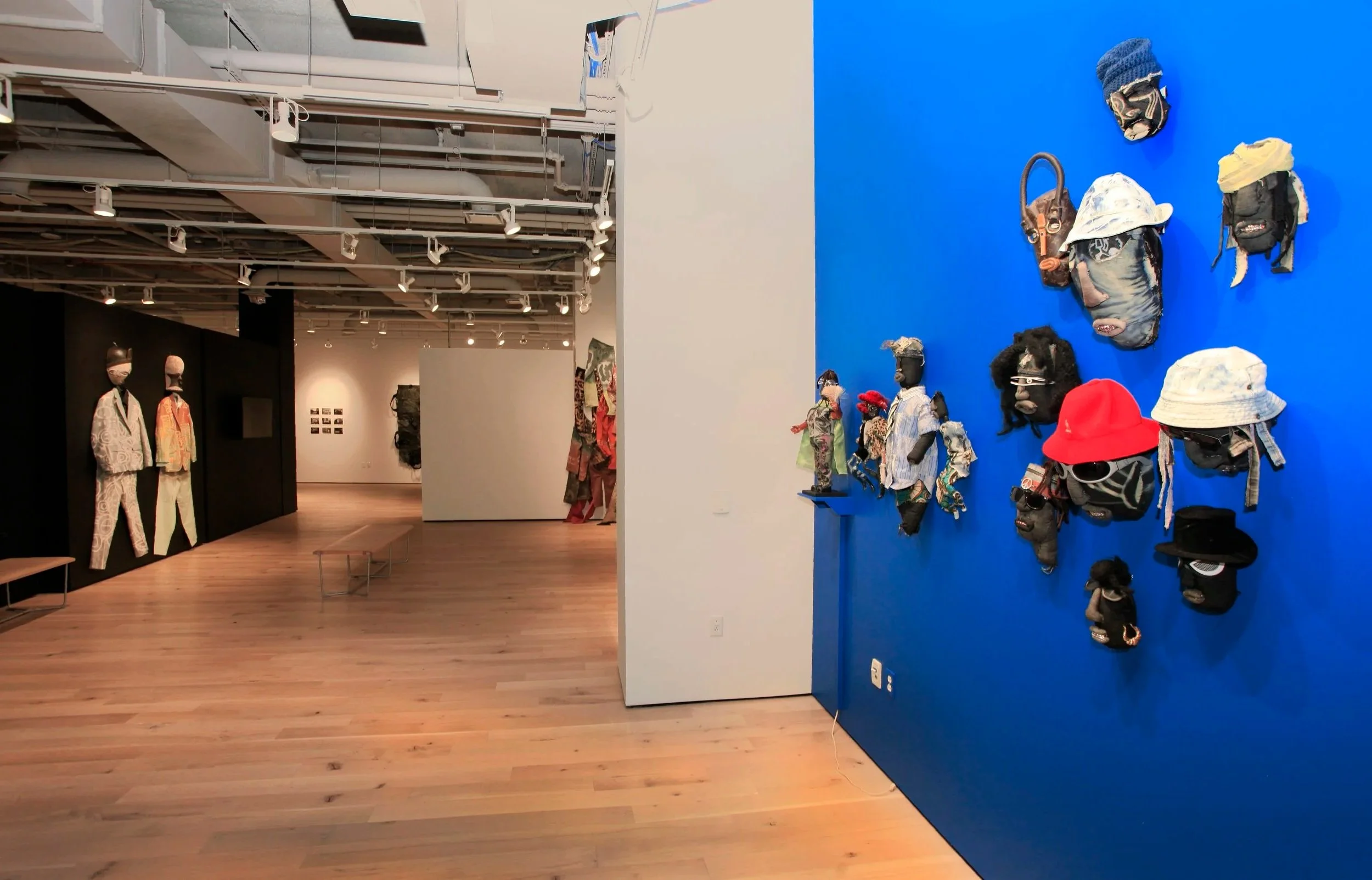
BULLETPROOF AMBITION
BLACK BERLIN
WHAT IS WHITE PRIVILEGE?
BROOKLYN BABY
HOW WE MOVE
NWA JENOSID
STILL STANDING
NEGRO REMOVAL
THE GOLDEN TRIANGLE
THE DIRTY
NIGHT CRAWLERS
BLOOD AND SOIL
STEEL & VELVET