
BULLETPROOF AMBITION
words by Linda Street | images by Manuel Acevedo, Armando Diaz, Art Paxton, and Linda Street
The story of the late artist Jerry Gant could never be told in only 1,000 words.
Our paths converged over a period of time, in a way that proved more influential on my life than I could have ever anticipated. “Newark’s Art Ambassador” and “The Basquiat of Newark” were titles bestowed upon Jerry, before and after his death on November 11, 2018, at exactly 11:11 am, or at least close enough to make a great urban myth. Jerry was adamant that after he died, he didn’t want people “to make [him] out to be a better person than [he] was.” But I think in their statements, there were no lies told.
Jerry was born in 1961 and reared in Newark, N.J., the home of Amiri Baraka, in the time of the historic 1960s rebellion and in the midst of what Marvin Gaye called “inner city blues.” He wore being Black and from Newark as badges of honor and imagined himself as a giant personality who would one day “be on world stages,” declaring it in a poem to his mother, Shirley. Building on his natural creative gifts, thirst for knowledge, and notoriety, he first emerged as an artist on the streets of Newark and New York City in the 1980s, selling hand-painted t-shirts and jeans from thrift stores, long before the advent of sustainable fashion.
Jerry’s early street art and graffiti pursuits led to a chance encounter with notable contemporaries Andy Warhol and Jean-Michel Basquiat. After being rebuffed by Basquiat during a 1985 phone booth call and fueled by a “fuck y’all” determination, he set out to develop his own style of portrait paintings. His design motifs evolved to an intricate system of visual symbols, similar to hieroglyphics. Ever the innovator, he honed layered methods of tie-dying and rarely-seen techniques of painting with bleach. These became recognizable features of his art-wear, which he aptly branded as, “Gantalism.” In addition to his graffiti tag “2NastyNas,” his name became synonymous with such iconic public declarations as “God Knows My Name,” “Detox The Mind,” and “Detox The Ghetto” painted in his signature flat black paint on walls, sidewalks, and lampposts, often accompanied by an image of someone who looks like someone you know.
He transformed wire, metal, textiles, and found objects, and became known for his depictions of urban Black expression, bringing together fashion, poetry, street art, painting, sculpture, and performance. As Congressman Donald Payne put it, “Jerry never met a medium he didn’t like.” Over a period of nearly 40 years, he became a major influence in shaping the social, artistic, and cultural landscape of the largest city in New Jersey and beyond.
I first met Jerry in early 2006, a few months after opening my Over The Edge boutique in Montclair, N.J., as a recent escapee from a thirty-year corporate career. I knew a few local fashion designers, including Hasan Love, who insisted on connecting me with this guy Jerry Gant, so we planned a date for him to stop in. Jerry showed up looking surprisingly understated, until he removed his cap to reveal a design maze shaved into his hair. Now we’re talking, I thought! He opened a laptop to show me his artwork and there it was: a face I had seen many times before, along with the inscription, “God Knows My Name.” It was the same graffiti piece painted on a utility box near a traffic light in East Orange. That red light caught me nearly every day on my way home from work. I would stare and wonder about the originator of the art. And here he was! We quickly became creative collaborators and fast friends, working together to elevate the Gantalism and Over The Edge brands. We created a destination for seekers of art, culture, fashion, and funk, until the boutique closed in 2008.
Admittedly, I was in awe of Jerry and his “oddball brilliance” as once described by the New York Times. Jerry called it “bulletproof ambition,” a phrase he coined in the ‘90s, describing the roots of his own impenetrable drive and passion in pursuit of his art. I shifted roles from maker to manager, launched Pink Dragon consulting and began working with Jerry to venture into the terrain of public art. Here’s where my corporate and administrative background came in handy. Jerry said it was its own form of artistry, which sounded like BS, but it worked!
At the time of his passing, Jerry and I had worked together for more than a decade. We secured commissions from Newark Housing Authority, NJ Transit and Trust for Public Land, the latter featuring 13 sculptures surrounding Nat Turner Park, the largest city-owned park in Newark. In 2018, he was among a select group of international artists featured on the Art Wall facade of the PSE&G Fairmount Heights Switching Station. His last commissioned work was installed in the Newark Public Library after this death. In a city filled with memorial statues and monuments dating back to the 1800s, Jerry Gant has the most distinctive public sculpture works installed throughout his beloved hometown. His glass sculpture, “My Artistic Left Hand” is on view in the Newark Museum of Art permanent collection and his mixed-media wood sculpture “Brick City Bop” was recently installed in the renovated historic Ballantine House.
In the 2013 documentary The Gantalist, Jerry says, “A legacy has been fulfilled. What’s in front of you today is a person who has taken my cuts and my scars and put them in a form that transcends this time.” He left an indelible mark on the city he loved. He made it his business to lend his support to numerous organizations and artists of every generation. He was truly the heartbeat of the Newark arts scene and his contributions to the community cannot be overstated. Newark Mayor Ras J. Baraka said it best, “If you don’t know Jerry Gant, you don’t know Newark.”
Jerry Gant was, without comparison, the most challenging and complex person I’ve ever met. That’s a polite way of saying, “This mf’er!” We had our moments, but meeting Jerry changed my life. Now with five years since his passing, I strive to amplify the artistic and intellectual awareness of this prolific artist. Believe me, legacy is a heavy lift!


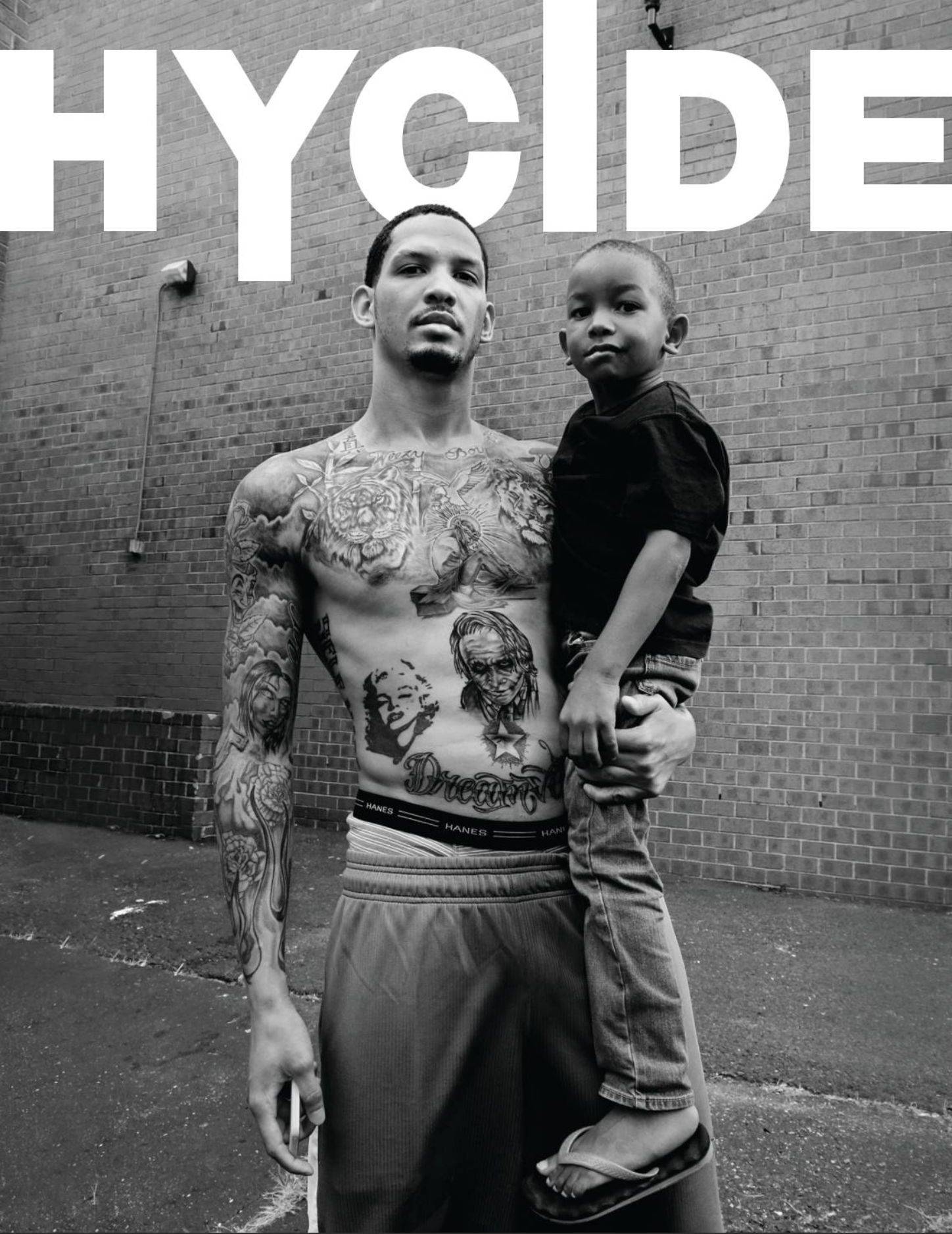


HYCIDE explores the roles we create for ourselves and those created for us, challenging the status quo while bearing witness to the feared, neglected and misunderstood.
Our Mission: Stories of survival and freedom. No judgment.
READ MORE FROM HYCIDE MAGAZINE
FORWARD EVER, BACKWARDS NEVER

BIKE LIFE
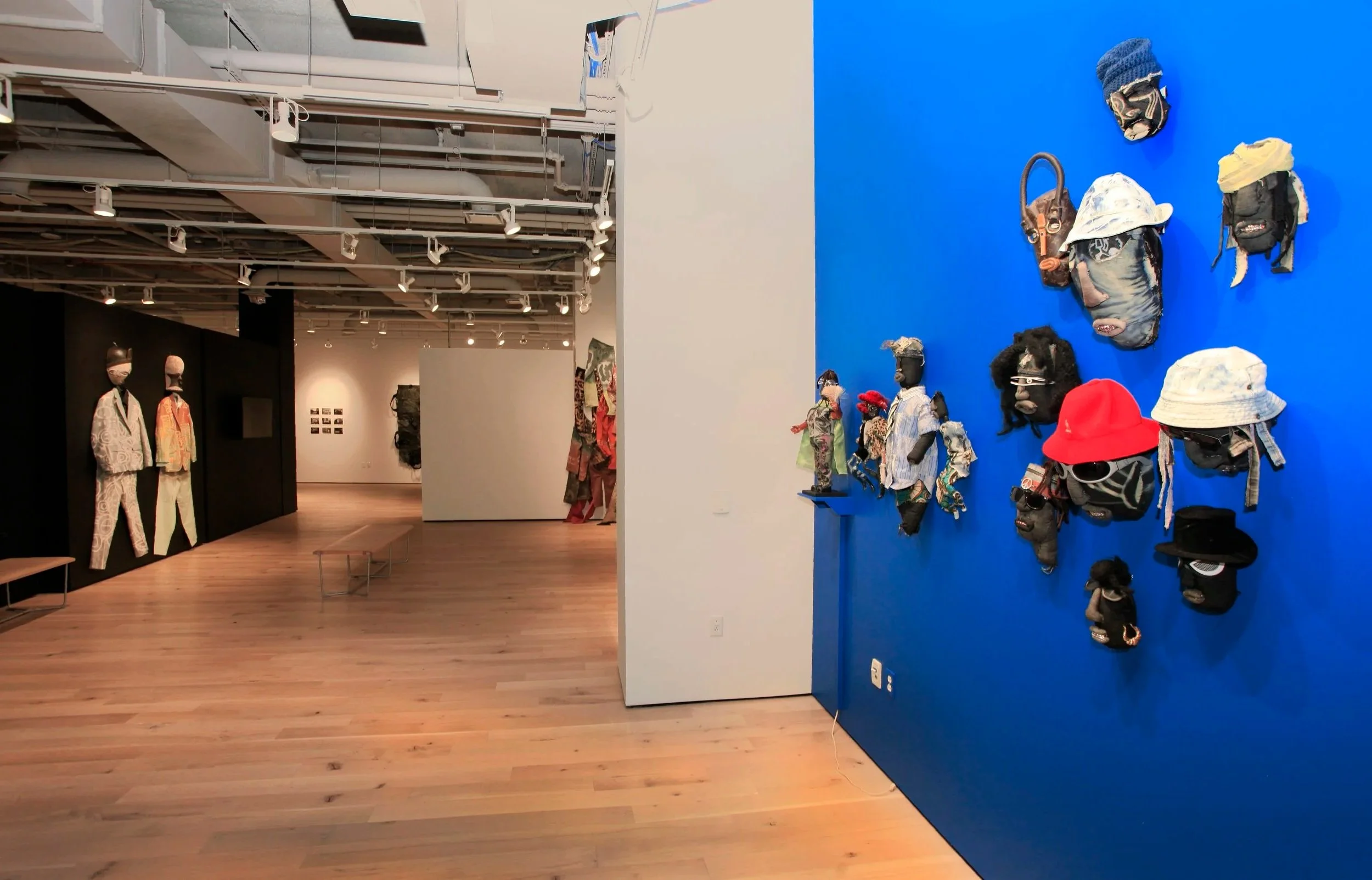
BULLETPROOF AMBITION
BLACK BERLIN
WHAT IS WHITE PRIVILEGE?
BROOKLYN BABY
HOW WE MOVE
NWA JENOSID
STILL STANDING
NEGRO REMOVAL
THE GOLDEN TRIANGLE
THE DIRTY
NIGHT CRAWLERS
BLOOD AND SOIL
STEEL & VELVET