
ME LOVE YOU LONG TIME
Words by fayemi shakur l Images by selected artists: Mariko Passion, Teresa Nasty, Skowmon Hastanan, Isauro Cairo, Anjali Bargava, Swati Khurana, Phuong Linh Nguyen and Gabby Quynh-Ann Miller
For more than a year, Edwin Ramoran traveled Southeast .Asia and the U.S., visiting galleries, nightclub dwellers and sex workers in search of artists for his new exhibition, "Me Love You Long Time," which runs through April 14 at Aljira, a Center for Contemporary Art in Newark. The show features themes of sexual identity and sexual commerce. As a former campus activist in college, assistant curator at The Bronx Museum of the Arts, director and curator of Longwood Arts Project in the Bronx, and director of exhibitions and programs at Aljira, Ramoran is no stranger to dialogues that engage the LGBTQ community in the arts. At Longwood, he developed a personal experiment to identify overlooked and unrecognized artists in the Bronx, who didn’t have much access to the gallery system or the opportunity to show their work. “Edwin’s curatorial practice reflected a brashness, diversity, and confidence that I had never seen before. What was happening in the streets of Newark, in that particular aspect was happening in his work. He’s a cultural worker, not with a high-minded academic approach, but with a community edge,” says Victor L. Davson, Aljira’s Executive Director. Ramoran shares the concept for his new show and the issues it addresses with HYCIDE.
HYCIDE: What is the basis for your current exhibition, Me Love You Long Time (MLYLT)?
ER: Southeast Asia has always been the nucleus of this curatorial project. I personally trace my roots to the Philippines, and I was born and raised in California. I’m a product of the Pacific Rim. However, I am influenced by my own personal cultural specificity and my goal as a curator to tell a story, providing a context via contemporary art, culture, and issues.
I’ve been interested in how overseas contract workers become indentured servants and warm body exports. The government in the Philippines encourages people to leave the country and work abroad so they can send money back to their families and help build the gross national product.
The name of the project comes from dialogue in the Stanley Kubrick film, Full Metal Jacket. There’s a scene where two U.S. GIs are sitting outside a Da Nang café drinking beers when a local Vietnamese hooker propositions them and they ask how much for her services. Her response is, “Fifteen dollar me love you long time. Me so horny.” It’s also a reference to Two Live Crew’s song Me So Horny, which sampled a line from the film.
Shortly after that song came out, the federal government started putting explicit warning labels on music. I didn’t have a problem with the depiction of prostitution in the film or the way the reference was re-contextualized and remixed in hip hop as a form of resistance—although it always came off as misogynistic. M.I.A. later took on the same lyrics in her song 10 Dollar; she re-writes it saying, “What can I get for 10 dollar? Anything you want.” It’s all about the construction of identity and unapologetic attitudes about sexuality.
I don’t like talking about stereotypes because there are always some people who fit them. But then there are the stereotypes of Asian women, who they say can pop ping-pong balls out of their coochies, and Asian men who are either asexualized, or Kung Fu superheroes. Those static images stay there and affect people’s perceptions. It’s not just about responding to how people react to you and how they see you, but how you see yourself. You can be in control of it. Theoretically, that’s what the show is about, sexual prowess and owning gender identity. It’s also about resistance, like, you can call me a ‘ho’ and I’m still gonna do it and support my family. The curatorial process is about presenting and forming a dialogue; it’s about education as well as entertainment and fine art.
HYCIDE: Who are some of the artists featured in the show?
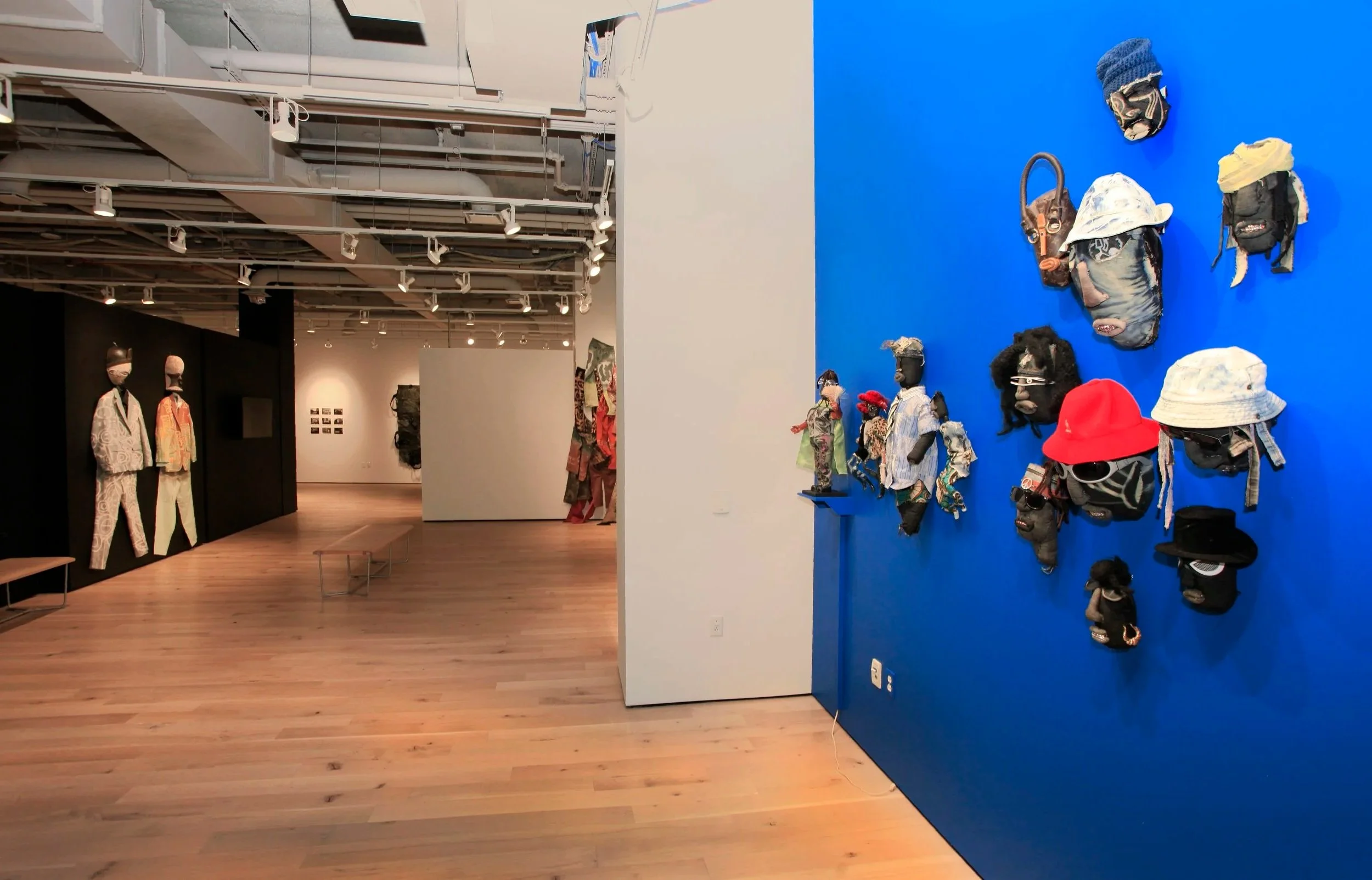
ER: The exhibition features a number of artists from Southeast Asia and North America whose work address sex, sexuality and gender identity. Hima B is a sex worker and filmmaker whose work is on how sex workers are exploited. Mariko Passion is a self-proclaimed urban geisha, sex worker and performance- based, interdisciplinary conceptual artist whose work is about being a sexualized being as well as an Asian. Nodeth Vang is an under-recognized portrait photographer of Hmong decent, but born in Bordeaux, France. He basically “cruises” online or in the public, meets men and sets up a time to photograph them—many of them are white men—so it’s a subversion of the colonial gaze, eroticizing and exoticizing white men. We’re presenting art and moving images from as early as the late 80s with videos by Trinidadian-Canadian-Chinese artist Richard Fung to art from the present by someone like Filipina-Portuguese painter and mixed-media artist Vanessa Ramalho.
HYCIDE: What was the purpose of your sex tour and the significance of the places you visited?
ER: I went on a “sex tour”, if you will, of Southeast Asia and the U.S. to identify artists for the exhibition. I also wanted to identify sex workers who do creative things, who are artists, photographers, and performers. Some of the artists make art about sex workers, and some are sex workers who are artists but haven’t had an opportunity to show their work. I met artists and arts organizers through contacts in the field of contemporary art and recommendations from my colleagues.
Lino Brocka, a feature length filmmaker from the Philippines, created films with narratives about underclass strippers and sex workers called macho dancers. I found it interesting that there is a whole industry around those films and I wanted to explore these places first hand. I would go to the macho dancer clubs and find people like this one artist who I asked to join me and my friends. He told me stories about how he wanted to support his wife and go to architecture school. Of course, it could all be fiction. And it all will cost you.
HYCIDE: How does your current social life relate to nightlife and how does art relate to those things?
ER: I’m always interested in the everyday aesthetic. When I look at nightlife or DJing, I’m interested in finding artists via those scenes because I feel like the club is a gallery space. They’re doing their own thing there without anyone telling them what to do. It’s a liberated space.The discothèque is a congregational place. It’s always been a utopian experiment in bringing people together. You don’t know what class or background a person is coming from when you’re enjoying the same feeling and the same music. As a metaphor it shows we’re all related. I’ve been meeting more artists in bars than in galleries recently. Galleries close way too early! The pub is a forum where everyone’s guard is down; there, we’re more open to ideas. As a curator, I’m learning that we’re all defined by what we put forth and what we share.
HYCIDE: What do you want people to take away from the exhibition and to be aware of?
ER: I always want people to feel something. Just seeing art is boring sometimes to me. It sounds like one of those multicultural clichés, but I want people to be introduced to artists they weren’t exposed to before, and I want the artists and public to have a chance to meet each other. It’s about community building and learning about each other in the context of the exhibition. It’s a rare opportunity. If a casual viewer is repulsed or offended by some of the artists’ expressions in this exhibition, they will need to realize that that is just a part of living.
Edwin Ramoran was born in Palm Springs, California and is an independent curator based in New York, New York. He currently provides consulting services in programming and development to the Bronx Council on the Arts. He was recently appointed lead guest curator for this year’s Art in Odd Places Festival in New York. Ramoran is a recipient of The Andy Warhol Foundation for the Visual Arts Curatorial Fellowship and the Apexart Outbound Residency.
Me Love You Long Time is on view at Aljira, a Center for Contempoary Art through April 14th. Additional public programs will be held on April 5th at Third Streaming in NYC and a closing reception and all day symposium on April 14th. For more information about the programs and gallery hours visit: www.aljira.org.
HYCIDE explores the roles we create for ourselves and those created for us, challenging the status quo while bearing witness to the feared, neglected and misunderstood.
Our Mission: Stories of survival and freedom. No judgment.
READ MORE FROM HYCIDE MAGAZINE