
HOTTENTOT VENUS: The Sarah Baartman Story
Words by fayemi shakur l Image by Akintola Hanif & BaJa Ukweli
Sarah Baartman was born in 1789. Working as a slave in Cape Town South Africa, she was ‘discovered’ by a British doctor, William Dunlop, who persuaded her to travel to England with him. He wanted to make money by putting Baartman on display as a “scientific curiosity".
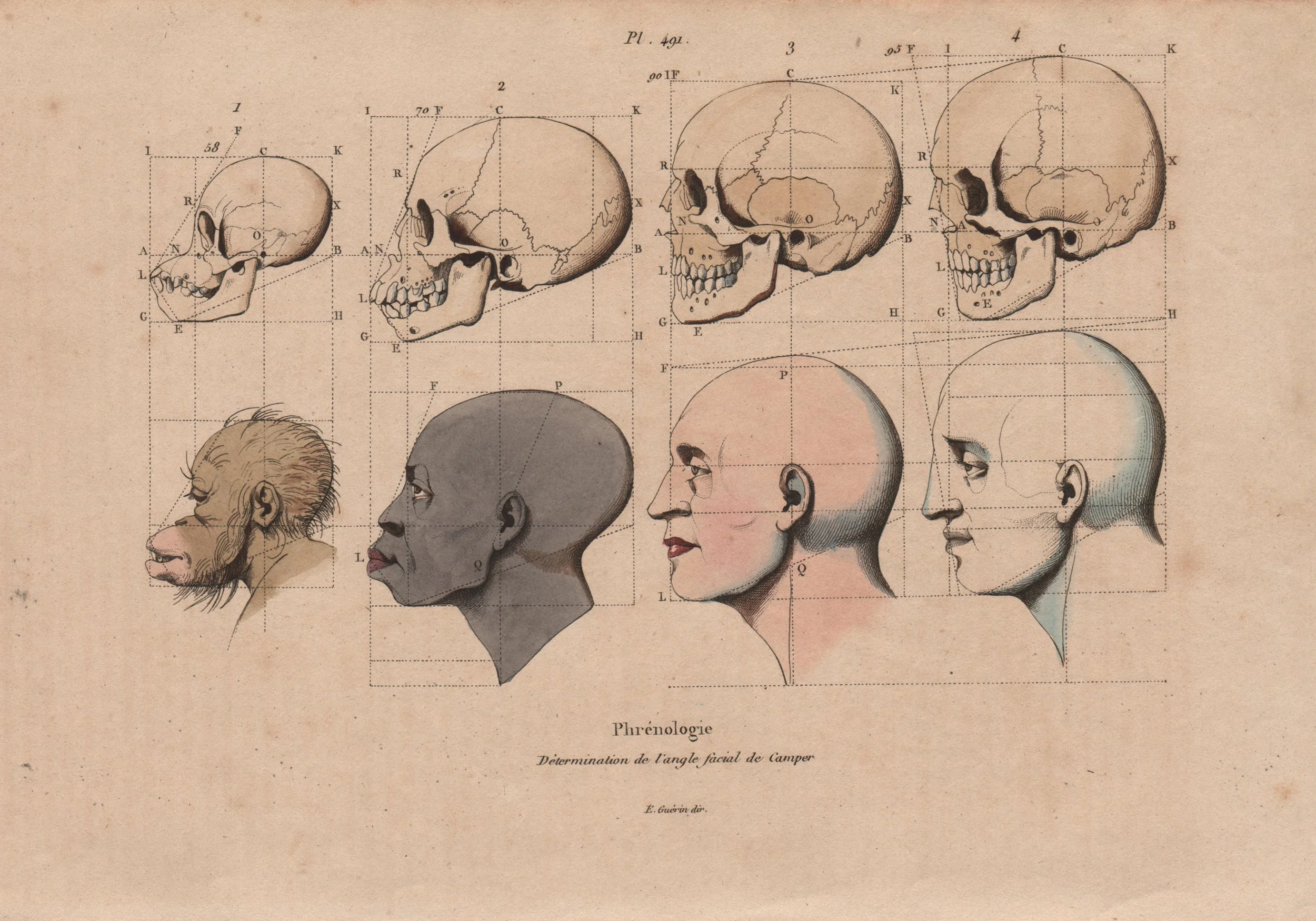
She was a voluptuous woman with large breasts and unusually large buttocks and elongated labia, common among her people of Khoisan decent. In the early 1800s Europeans arrogantly obsessed with their own superiority, enjoyed proving that Black people and others were inferior and oversexed. Baartman did not know she was to become their favorite case study.
She went to Europe with Dunlap willingly, thinking she would find fame and fortune. Dunlap promised he’d share the money they made. But she was sold as a freak show, exhibited at circuses led by an animal trainer, at times caged and forced to behave like a wild animal. Fascinated by her body, the Europeans called her Hottentot Venus. 'Hottentot' was a name given to people with cattle, a reference to her African tribe. Venus is the Roman goddess of love. But Sarah was no object of admiration or adoration. She was treated as a spectacle, an object of leering and abuse. Londoners poked at her bottom as she stood onstage. They stared, touched and laughed.
A month after her show opened, abolitionists were convinced she performed unwillingly and began a High Court lawsuit on her behalf. When asked whether she would prefer to go to Bible school and then return home, or stay in England performing with a contract and a salary, she said she wanted to stay. The case collapsed. Her choices were limited: return to servitude in colonized South Africa, or endure exploitation in free England. The Hottentot Venus show went on.
She did not show her vagina publically but sometimes posed nude at museums and universities and allowed Europeans to make drawings of her body. They made anatomic drawings, cartoons, playbills, posters, paintings and sculptures of her image. She became the stuff of jokes and humiliation regularly subjected to visual dissection, a symbol of African exoticism.
She spent four years in London, and then moved to Paris, where she continued her degrading round of shows and nearly naked exhibitions. She was a celebrity. In Paris she attracted the attention of medical students and French scientists, including Georges Cuvier. In his notes, Cuvier said Baartman was very intelligent, had an excellent memory and she could speak Dutch. He described her movements as monkey-like. Cuvier, who was at the center of an eminent school of social anthropologists, believed Baartman was the missing link, the highest form of animal life and the lowest form of human life.
No one knows if Dunlop ever paid Baartman for her “services”, but if he did, it wasn’t enough to buy herself out of the life she was living. When the Parisians got tired of the Baartman show, she turned to alcohol and prostitution. In 1815, 25-year-old Baartman died of syphilis and possibly loneliness and a broken heart. But her story didn’t end there.
After she died, Cuvier made a plaster cast of her body, then removed her skeleton and, after cutting out her brain and genitals, pickled them and displayed them in bottles at the Musee de l’Homme, a museum in Paris. Her genitalia and other body parts were on public display for 160 years until they were finally removed from view in 1974. In 1994, then President Nelson Mandela requested her remains be brought home. In January 2002, Baartman’s remains were finally returned to Cape Town to be laid to rest with a proper burial. Baartman became an icon. The Saartjie Baartman Centre for Women and Children opened in Cape Town in 1999, as a refuge for survivors of domestic violence.
I have come to wrench you away –
away from the poking eyes
of the man-made monster
who lives in the dark
with his clutches of imperialism
who dissects your body bit by bit
who likens your soul to that of Satan
and declares himself the ultimate god!
I have come to soothe your heavy heart
I offer my bosom to your weary soul
I will cover your face with the palms of my hands
I will run my lips over lines in your neck
I will feast my eyes on the beauty of you
and I will sing for you
for I have come to bring you peace.
--an excerpt from “A Poem for Sarah Baartman” by Diana Ferrus (a Khoisan woman)
HYCIDE explores the roles we create for ourselves and those created for us, challenging the status quo while bearing witness to the feared, neglected and misunderstood.
Our Mission: Stories of survival and freedom. No judgment.
READ MORE FROM HYCIDE MAGAZINE