
CARNIVAL DE RUA: Sadness has no end. Happiness does.

Words by Nafeesah Allen | Images by Marcelo Santos Braga

Every year, hundreds of thousands of tourists flock to Rio De Janeiro for its annual carnival celebration. The ritual of carnival began as an ancient Greek celebration of Dionysus, the god of wine. The Roman’s called it “Saturnalia,’’ a day when slaves and masters switched clothes and got drunk. With the rise of the Catholic Church, it was associated with the days leading up to Lent, when followers gave up indulgences for 40 days. Like Mardi Gras in New Orleans, carnival is a spectacular, hedonistic celebration meant to be a release before days of self-denial. It comes from the Latin phrase “Carne Vale,’’ which means “Farewell to the Flesh.’’

A band plays on the roof of a truck that doubles as a parade float. You wonder how many crushed beer cans can fit in the Ikea-sized plastic bag on the back of this child walking with her mother, who is also collecting enough recycling wages to last a few months in the favela. You wonder how the confetti will get swept from the streets, and if carnival would be the same without it. You decide not to think about that anymore. You are at Carnaval De Rua (Street Carnival) in Rio. You head off for another overpriced beer.

Carnaval de Rua is only half of the show in Rio de Janeiro. There is a more expensive, more traditional type of Carnival celebration happening in the Sambodromo (samba drome), the stadium where legends are made. In there, somewhere, is a competition of costumes and showmanship. In there, well-manicured and practiced samba schools sweat under the lights and shake their thigh muscles to win money and bragging rights.

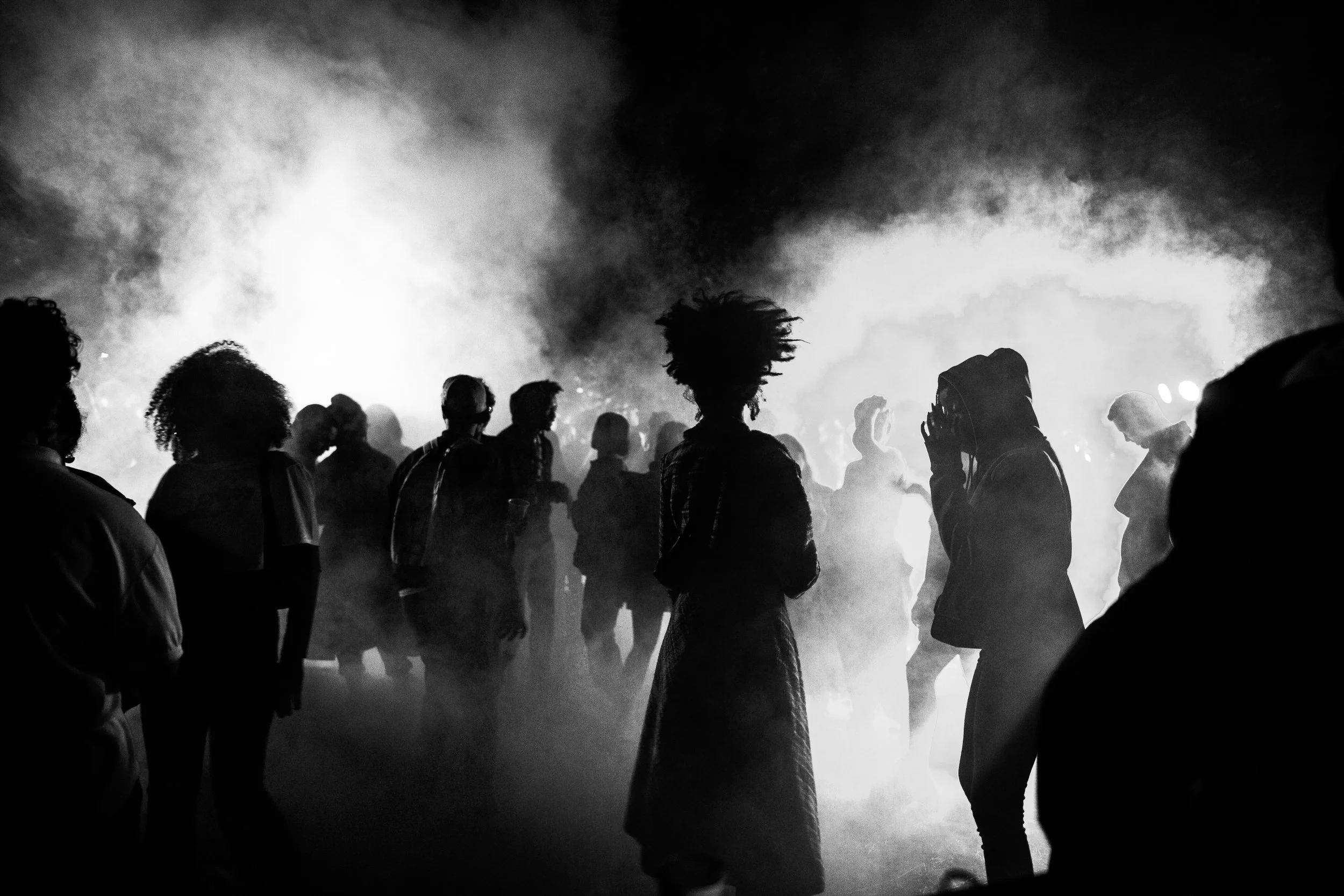
But with Brazil’s socioeconomic gap spreading wider by the day, nosebleed seats at $400 US greenbacks a pop are simply not an option for the average Brazilian. They’re even less justifiable for the average tourist, when flights from New York regularly reach upwards of $2,000. So for those dying to live the dream and see if the rumors about orgiastic partying are true, Carnaval De Rua is the only alternative. Everyday a new bloco (band) sets up in a different bairro (neighborhood) and let’s loose their best tunes, biggest vibes, loudest crowd pleasers, to the hordes of screaming people at the foot of the stage, at a fixed show, or along the sidewalks of the parade route, if the band is moving atop a truck.

You think it’s odd how quickly a normal square can turn into a dingy dive bar – with beer on the cheap and bumper to bumper foot traffic. But, this is no ordinary dub. There’s samba here. Samba Rock (pronounced Rocky). Samba de Pagode. Samba Enredo. Samba de Gafieira. Samba Raiado. And where’s there’s samba, there are kissing couples who don’t feel the crowds nipping at their heels. In this scene, these carefree lovers are on to something. Samba is grown folks music. It’s made for a day of hickies, passion marks, love bruises that often foreshadow baby-making. The experience is more carnal than romantic, but that’s only fitting for this occasion. Frankly, the overwhelming number of gringos in the crowd, and the number of comfort women at their sides, killed the romance a long time ago.

In the middle of this crowded street, there’s always someone to touch and someone touching you back. At some point you stop asking if it’s a guy or a girl who has been playing a two-hour anonymous game of grab ass with you. You really don’t care, so long as you still have your wallet. You head off for another overpriced beer.

Drinking at these quantities, at this time of day, is dangerous. To be clear, it’s an Alice in Wonderland kind of danger that’s much more trippy than run of the mill scary. There is an adventure at every bend, though more than likely this day will end one of two ways: you, asleep on a sidewalk or you, trying not to piss your costume pants while waiting in the port-a-potty line. But, when in Rome…

You wonder if the streets for the high-end tourist are calmer or safer. In reality, those streets are just pick-pocketer hang outs, where Blackberrys and iPhones go to die, and where your average street kid or normal crackhead in a pinch becomes financially resurrected. But you decide that in crowds like those, on occasions like these, electronics are just a small price to pay for this kind of public euphoria.

Such are the costs of being a groupie in plain sight, chasing down your favorite bloco with reckless abandon. There is no shame in singing aloud and breaking into dance with a group of perfect strangers. This feels like going to the playoffs after going to confessional – you’re light on your feet, you haven’t a damned thing to lose and – for a split second – all is right in your world. Cristo Redentor (Christ the Redeemer) might be high up in the hills, but here on flat land there are thongs among straight men, lesbians kissing on the beach, Brazilian waxes on pre-pubescent bodies and an occasional picturesque, local family.

It is safe to say that carnival is its own cult of personality. If it were Jim Jones, you would be asking for seconds of that Kool Aid. You’re a true fan, among like-minded individuals. You’ve all paid with the pound of flesh that is your liver for standing room only admission to the best show on earth. And that’s exactly what you’ll tell yourself (in voice over, in your head) for years to come. So long as you still have your passport and enough money to get to wherever you’re sleeping that night, then you have lived the dream. Somewhere far off in the distance, you think you hear a carnival lullaby. It sounds a little something like Antônio Carlos Jobim’s “A felicidade,” from the movie Black Orpheus. But then you realize that the voice in your head sounds a lot like Smokey from the movie Friday and he keeps whispering, “Take advantage, man. Take advantage.”

It’s only 4pm.

Nafeesah Allen is a native of Newark, NJ and has contributed to both popular and academic publications, including the Journal of International Affairs, Scholar & Feminist Online, Hanging Loose Press and the Fader magazine. She has over five years experience researching Brazilian culture.

Buy HYCIDE in print
HYCIDE cover
HYCIDE cover
HYCIDE cover
HYCIDE cover
HYCIDE cover
HYCIDE cover
HYCIDE cover
HYCIDE cover
HYCIDE cover
HYCIDE cover

HYCIDE explores the roles we create for ourselves and those created for us, challenging the status quo while bearing witness to the feared, neglected and misunderstood.

Our Mission: Stories of survival and freedom. No judgment.

    READ MORE FROM HYCIDE MAGAZINE