
Along Those Lines

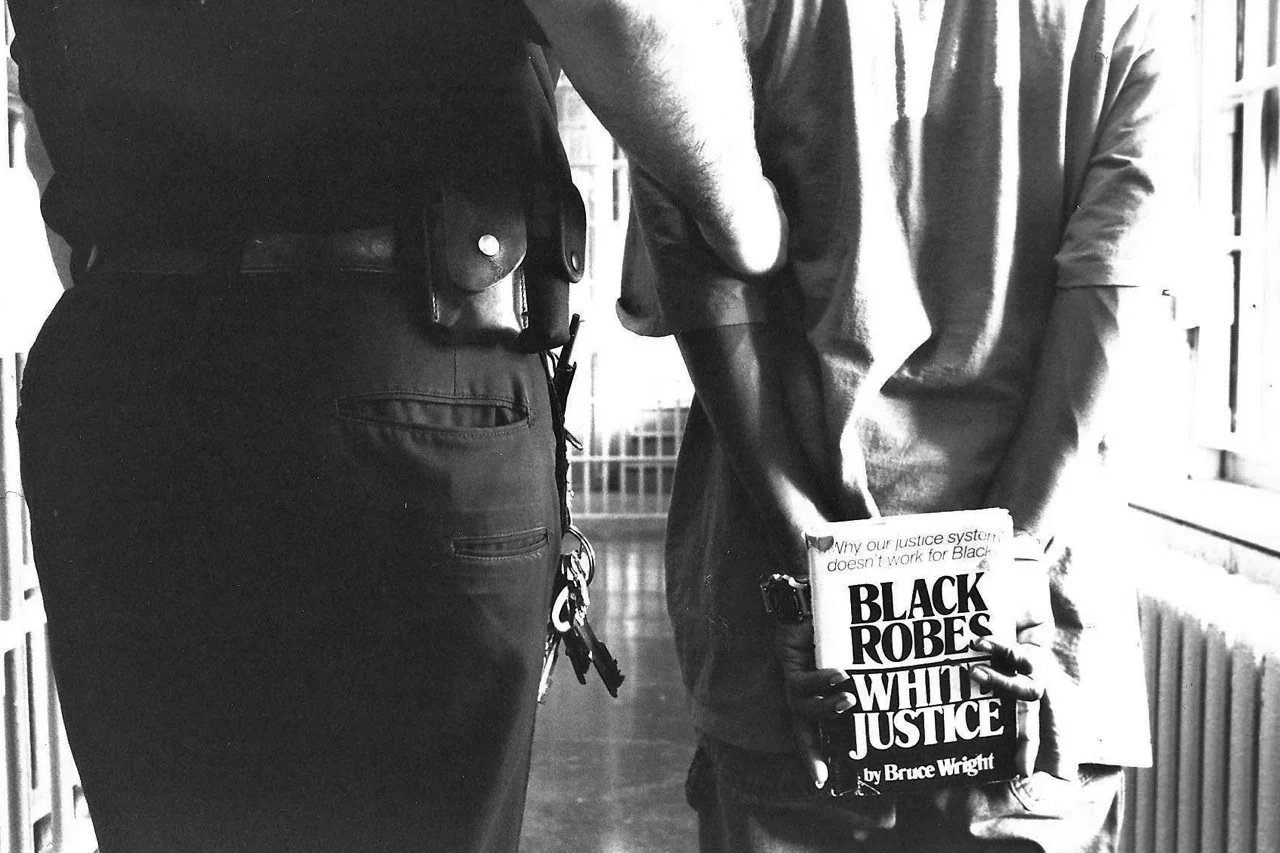
Words by Carrie Stetler | Images by Nick Kline

Their role in the history of Newark’s self-image is small and mostly uncredited. In generically-labelled files, like “Janitor” and “Nursing Aid,” are the decades-old images of city workers and residents, photographed for long-forgotten municipal PR campaigns. They are among thousands of photos housed in the City of Newark’s Archives & Records Management Center, which dates back to the 1930s. Since 2005, there’s been an official effort by the city to digitize and catalogue them.

When Nick Kline, a photo-based artist and Rutgers-Newark photography professor, began looking through the images last year, he was struck by what he found. Along with photos of politicians like Kenneth Gibson, Newark’s first Black mayor, and state Assemblywoman Sheila Y. Oliver, were pictures of anonymous residents and city employees from the 1960s through the 1980s. They were originally intended as marketing images for city government programs and policies, appearing in mid-70s publications like “People Power: The Official Monthly Organ of Newark, New Jersey’s Employment and Training System.’’

Several images still bear the obsolete mark-ups and terminology of a pre-digital printing and editorial process. “I discovered many with tracing paper hinged to them and with pencil line crop marks drawn with ruler and other masking techniques,” says Kline. “Other times it’s red cellophane used to mask images.”

Phrases like “crop as needed” and “flop,’’ a reference to the reverse side of an image, were scrawled on and around the photos. Fascinated by the images’ physical and ideological manipulation, Kline used them as the basis of his series, “Newark Will See it Through,’’ a title he borrowed from a WW I poster found in the archives.

Kline “re-photographed” the images — often with the tape, lines, and paper still affixed — to explore what they represent, both in and out of their original context. “I’m interested in the structure of images and how they are tied to larger social and political systems,’’ he says.

“The files were not intended for public view but were constructions of an idea...They were used to show that the system is working, and that smart, passionate, capable people are in charge, with the priority of improving people’s lives,’’ Kline observes.

Although in most cases the images were used to advocate for anti-poverty programs, city education, and healthcare efforts, Kline recognized their potential to be used for other agendas. “The boxes and lines intersecting with people’s faces, taking people out of context, isolating figures, can be interpreted as powerful metaphors for systemic structures that contain and marginalize groups and individuals,” Kline explains. “But these gestures can also strengthen and empower.’’

The project led him to explore his own artistic intentions and techniques — and his point-of-view as a white man presenting the images. “Many photos are of people, whose identity has historically been controlled for so long,’’ says Kline. “And here I am, making another frame around them. I’m essentially using the faces of individuals, the history of the city and its elected officials, and the work of other photographers and editors to create my own work. I feel a deep responsibility to be reflective of my own re-framing of the images.”

One of Kline’s intentions, he says, is to focus the viewer’s gaze on the photos’ subjects rather than city officials’ self-promotional efforts. “I often feel I can get closer to the real person, which provides some distance to the original image and its filter of propaganda,’’ he says.

The propaganda, however, can also be viewed as evidence of Newark’s determination to create a future for itself. “Many of the photographs from this time period demonstrate the resilience and pride of the city. My work attempts to open up that history and keep it in the foreground.’’

Buy HYCIDE in print
HYCIDE cover
HYCIDE cover
HYCIDE cover
HYCIDE cover
HYCIDE cover
HYCIDE cover
HYCIDE cover
HYCIDE cover
HYCIDE cover
HYCIDE cover

HYCIDE explores the roles we create for ourselves and those created for us, challenging the status quo while bearing witness to the feared, neglected and misunderstood.

Our Mission: Stories of survival and freedom. No judgment.

    READ MORE FROM HYCIDE MAGAZINE